Scrub Life: A Designer’s Take on Medical Embroidery
As someone who has spent years tweaking stitch paths and troubleshooting thread breaks, I approach every new machine embroidery design with a mix of curiosity and skepticism. We have all been there: you download a file that looks perfect in the preview, only to find it puckers the fabric or loses its charm once stitched out. That is why I took a close look at Scrub Life, not just as a digital asset, but as a potential cornerstone for real-world crafts and commercial products.
This isn’t just another generic medical icon. Scrub Life carries a specific mood—it is playful yet professional, acknowledging the grit and humor of healthcare workers. For designers and Etsy sellers targeting nurses, doctors, and medical students, this kind of relatable imagery is gold. But does it hold up under the needle? Let’s break down how this design performs in actual production environments.
First Impressions and Visual Personality
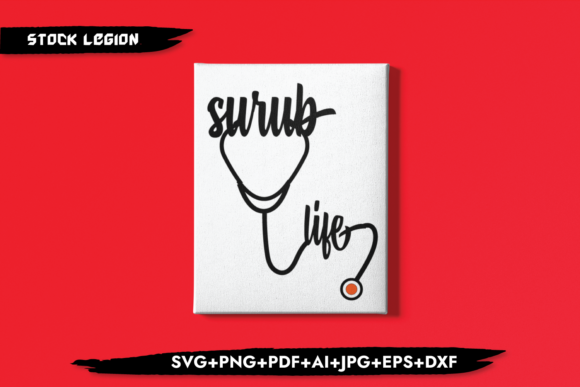
The first thing that strikes me about Scrub Life is its clarity. In the world of Graphics for embroidery, simplicity often wins. Complex gradients and tiny details get lost in translation when converted to thread. This design appears to respect the limitations of the medium. The layout feels balanced, with a visual weight that suggests it would sit comfortably on a left chest or as a central focal point on a tote bag.
The theme is unmistakable. It speaks directly to the identity of medical professionals. When I visualize this stitched out, I don’t just see a logo; I see a badge of honor. For a handmade product to resonate, it needs to connect emotionally. This design achieves that by tapping into the shared culture of "scrub life." It is not overly clinical; it has personality. This makes it ideal for personalized gifts that feel thoughtful rather than mass-produced.
Real-World Application: The Tote Bag Test
To truly evaluate an embroidery file, you have to imagine it on a specific substrate. Let’s consider a canvas tote bag, a staple for nursing students and hospital staff who need to carry textbooks, stethoscopes, and lunch boxes. Canvas is a sturdy, woven fabric that handles stitch density well.
If I were producing this for a small shop product line, I would place Scrub Life centrally on the bag. The 6x6 inch dimension mentioned in the file specifications is generous enough to make a statement without overwhelming the item. On a neutral-colored canvas, such as navy or charcoal, the design would pop. I would recommend using high-contrast thread colors—perhaps a bright medical blue or crisp white against the dark background. The smooth, professional quality of the files suggests that the digitizing has been optimized to minimize jumps and trims, which is crucial for maintaining a clean look on a large surface area.
Beyond totes, think about sweatshirt embroidery. A fleece or cotton-blend hoodie is a popular item for winter shifts. Here, the design’s simplicity works in your favor. Heavy fabrics can distort if the stitch count is too high or the density is uneven. Since Scrub Life is described as having been tested at the highest quality, it likely avoids the pitfalls of excessive saturation that cause fleece to pucker. However, always use a cutaway stabilizer for stretchy fabrics to ensure the design remains crisp after multiple washes.
Navigating Fabric and Hoop Constraints
While Scrub Life is versatile, it is not universal. As a designer, I must advise caution with certain materials. For instance, if you are planning baby embroidery on a delicate onesie, the 6x6 size might be too large and heavy. You would need to scale it down significantly, but doing so risks losing detail if the original digitizing relies on fine lines. Always test on scrap fabric first. If the design includes small text or intricate borders, shrinking it below 3 inches might cause the stitches to merge, turning clear letters into a blob of thread.
Similarly, consider curved surfaces like caps. Embroidering on a structured cap requires a different approach than flat fabric. The design needs to be centered perfectly, and the backing must be rigid. If Scrub Life has any wide, flat areas of fill stitch, it could pull on the cap’s front panel if not stabilized correctly. I recommend using a strong tear-away or heat-seal stabilizer for hats. Also, check if the design has been optimized for curved hoops; some standard files need slight adjustments to prevent distortion on rounded surfaces.
Dark fabrics present another challenge. If you are stitching on black scrubs, you cannot rely on the fabric color to fill in gaps. You may need to add an underlay or choose a design variant that accounts for high contrast. The transparent background of the PNG preview helps you visualize placement, but remember that thread behaves differently than ink. A satin stitch border might look sharp in the preview but could appear wavy on textured fabric if the tension is off.
Commercial Value and Brand Consistency
For commercial embroidery projects, consistency is key. If you are building a brand around medical apparel, Scrub Life can serve as a signature element. It helps establish recognition. Customers trust products that look professional. A sloppy stitch-out damages that trust instantly. Because this file is marketed as a professional-grade asset, it reduces the risk of user error, provided you follow best practices.
When creating printable mockups for your online store, use the high-resolution 300 dpi file included in the ZIP. This ensures your digital previews look as good as the physical product. High-quality images drive engagement on platforms like Etsy. Show the design on various items—aprons, pillow covers, kitchen towels—to demonstrate versatility. However, be realistic. Do not promise that it will look identical on silk as it does on denim. Educate your customers about fabric choices to manage expectations.
Practical Designer Notes for Best Results
Before you launch your next craft business campaign with this design, keep these technical checkpoints in mind:
- Test Stitch First: Never run a full production batch without sewing a sample. Check for thread breaks, nesting, and registration issues.
- Check Licensing: Confirm whether the license allows for unlimited commercial sales or if there are restrictions. This is vital for digital product sellers and physical goods manufacturers alike.
- Thread Contrast: Select threads that stand out against the fabric. For medical themes, blues, greens, whites, and reds are standard, but don’t be afraid to experiment with pastels for a softer look.
- Stabilizer Selection: Match your stabilizer to your fabric. Use cutaway for knits and stretchy materials, and tear-away for stable wovens like cotton or canvas.
- Hoop Size Verification: Ensure your machine can accommodate the 6x6 inch area. If you only have a 4x4 hoop, you may need to split the design or choose a smaller version if available.
- Wash Testing: Wash and dry your sample piece. Check for shrinkage, thread bleeding, or distortion. This step is non-negotiable for finished product quality.
In conclusion, Scrub Life is a strong contender for your design assets library. It balances aesthetic appeal with practical usability. Whether you are creating holiday embroidery gifts for nurse friends or stocking your boutique with custom apparel, this design offers a solid foundation. Just remember that the file is only half the equation; your choice of fabric, thread, and technique will ultimately define the success of your embroidery project.